> For the complete documentation index, see [llms.txt](https://docs.flowiseai.com/llms.txt). Markdown versions of documentation pages are available by appending `.md` to page URLs; this page is available as [Markdown](https://docs.flowiseai.com/integrations/langchain/vector-stores/qdrant.md).
# Qdrant
## Prerequisites
A [locally running instance of Qdrant](https://qdrant.tech/documentation/quick-start/) or a Qdrant cloud instance.
To get a Qdrant cloud instance:
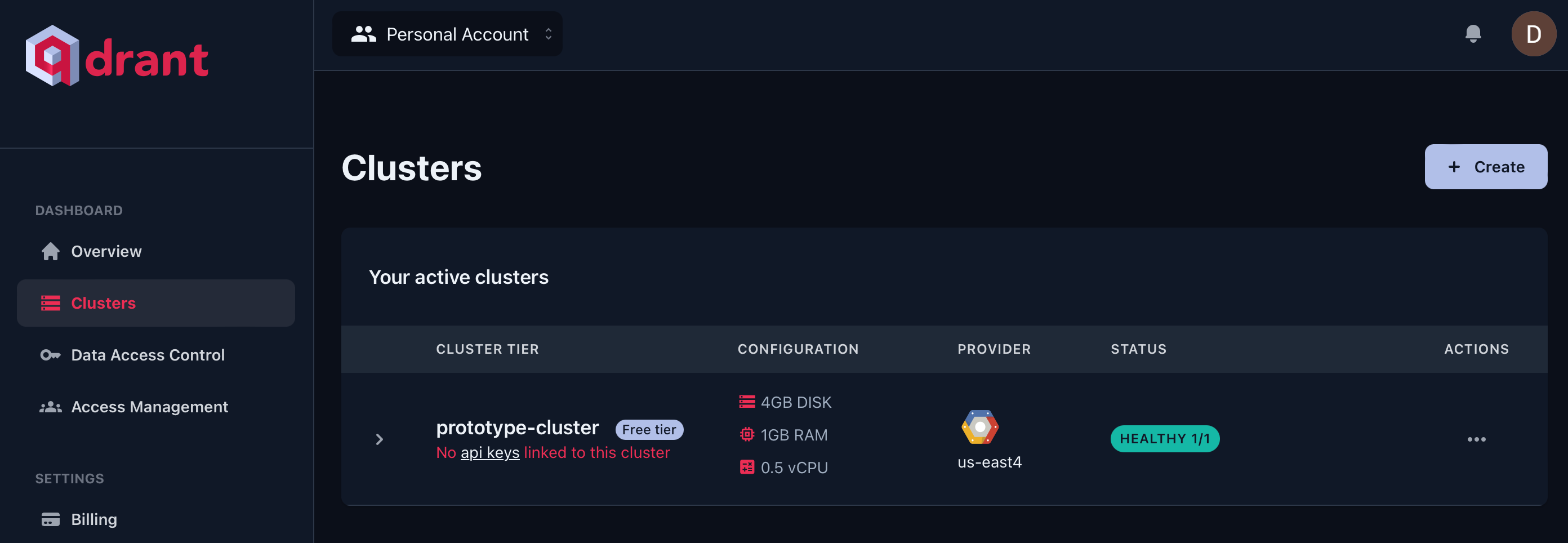
1. Head to the Clusters section of the [Cloud Dashboard](https://cloud.qdrant.io/overview).
2. Select **Clusters** and then click **+ Create**.
3. Choose your cluster configurations and region.
4. Hit **Create** to provision your cluster.
## Setup
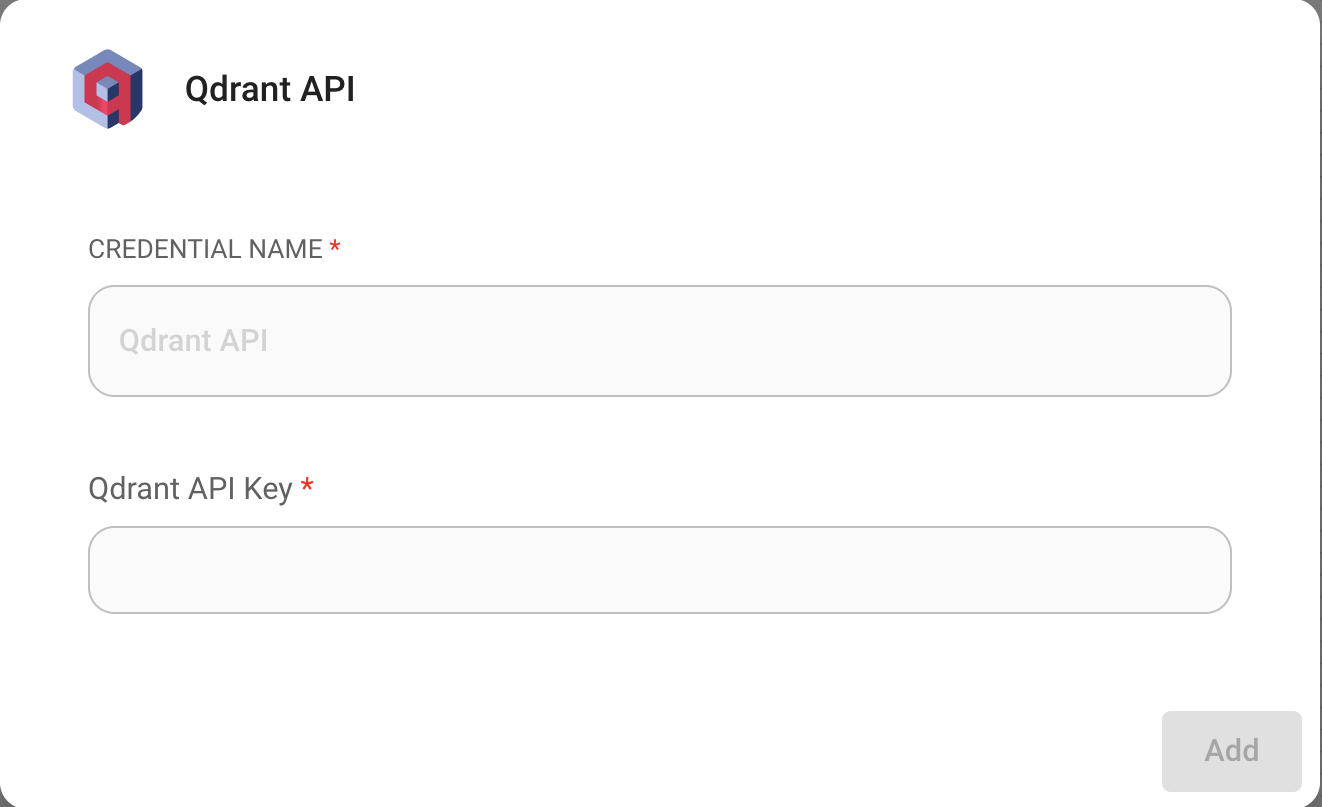
1. Get/Create your **API Key** from the **Data Access Control** section of the [Cloud Dashboard](https://cloud.qdrant.io/overview).
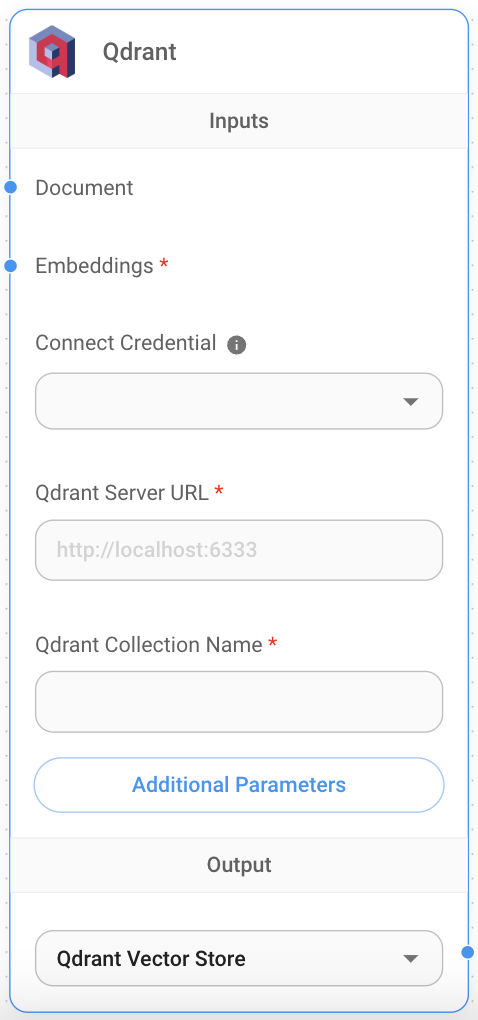
2. Add a new **Qdrant** node on canvas.
3. Create new Qdrant credential using the API Key
4. Enter the required info into the **Qdrant** node:
* Qdrant server URL
* Collection name
5. **Document** input can be connected with any node under [**Document Loader**](/integrations/langchain/document-loaders.md) category.
6. **Embeddings** input can be connected with any node under [**Embeddings**](/integrations/langchain/embeddings.md) category.
## Filtering
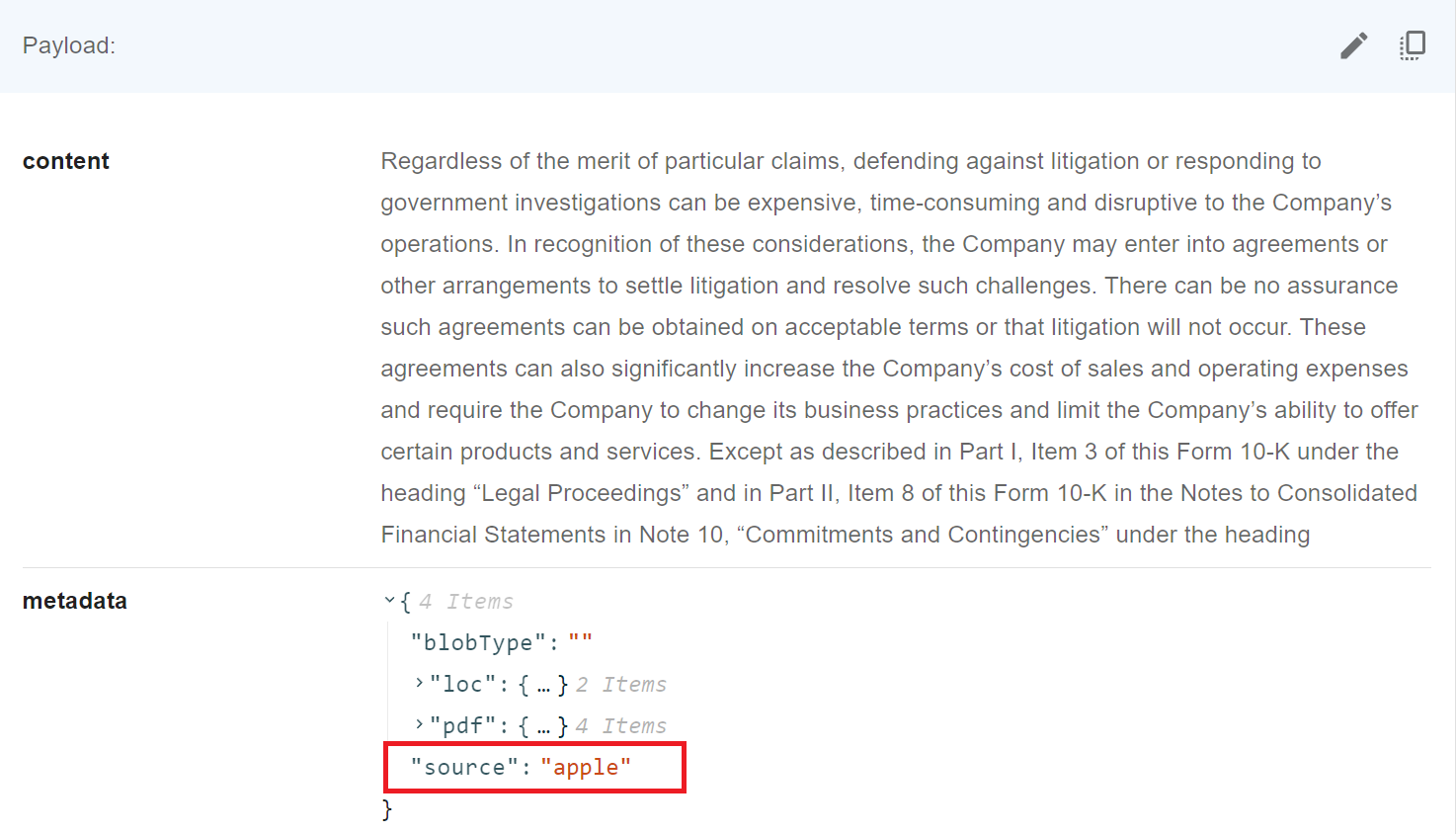
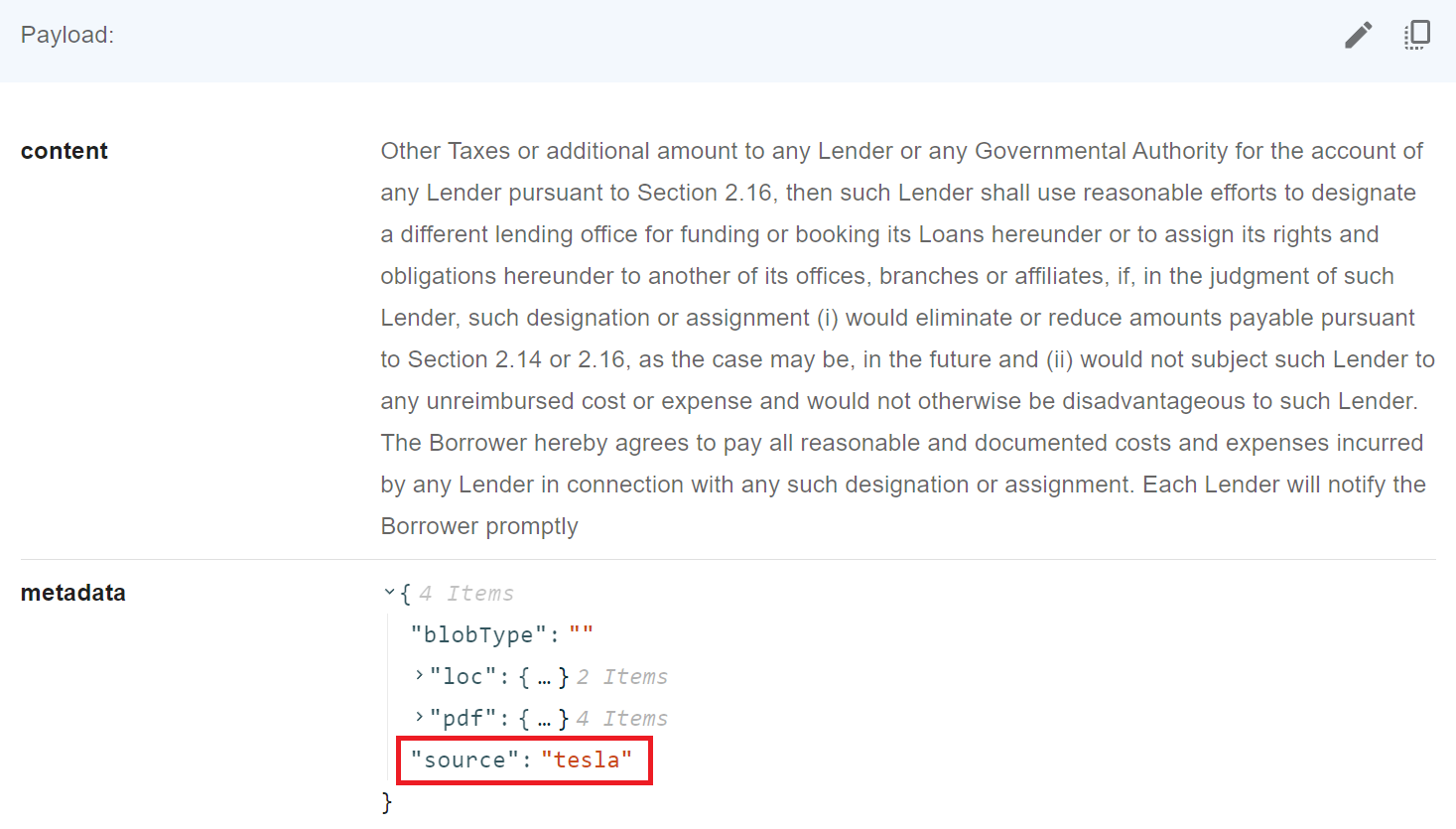
Let's say you have different documents upserted, each specified with a unique value under the metadata key `{source}`
Then, you want to filter by it. Qdrant supports following [syntax](https://qdrant.tech/documentation/concepts/filtering/#nested-key) when it comes to filtering:
**UI**
**API**
```json
"overrideConfig": {
"qdrantFilter": {
"should": [
{
"key": "metadata.source",
"match": {
"value": "apple"
}
}
]
}
}
```
## Resources
* [Qdrant documentation](https://qdrant.tech/documentation/)
* [LangChain JS Qdrant](https://js.langchain.com/docs/integrations/vectorstores/qdrant)
* [Qdrant Filter](https://qdrant.tech/documentation/concepts/filtering/#nested-key)
%20(1)%20(1)%20(1)%20(1)%20(1)%20(1)%20(2)%20(1)%20(1)%20(1).png?alt=media)