> For the complete documentation index, see [llms.txt](https://docs.flowiseai.com/llms.txt). Markdown versions of documentation pages are available by appending `.md` to page URLs; this page is available as [Markdown](https://docs.flowiseai.com/integrations/langchain/vector-stores/elastic.md).
# Elastic
## Prerequisite
1. You can use the [official Docker image](https://www.elastic.co/guide/en/elasticsearch/reference/current/docker.html) to get started, or you can use [Elastic Cloud](https://www.elastic.co/cloud/), Elastic's official cloud service. In this guide, we will be using cloud version.
2. [Register](https://cloud.elastic.co/registration) an account or [login](https://cloud.elastic.co/login) with existing account on Elastic cloud.
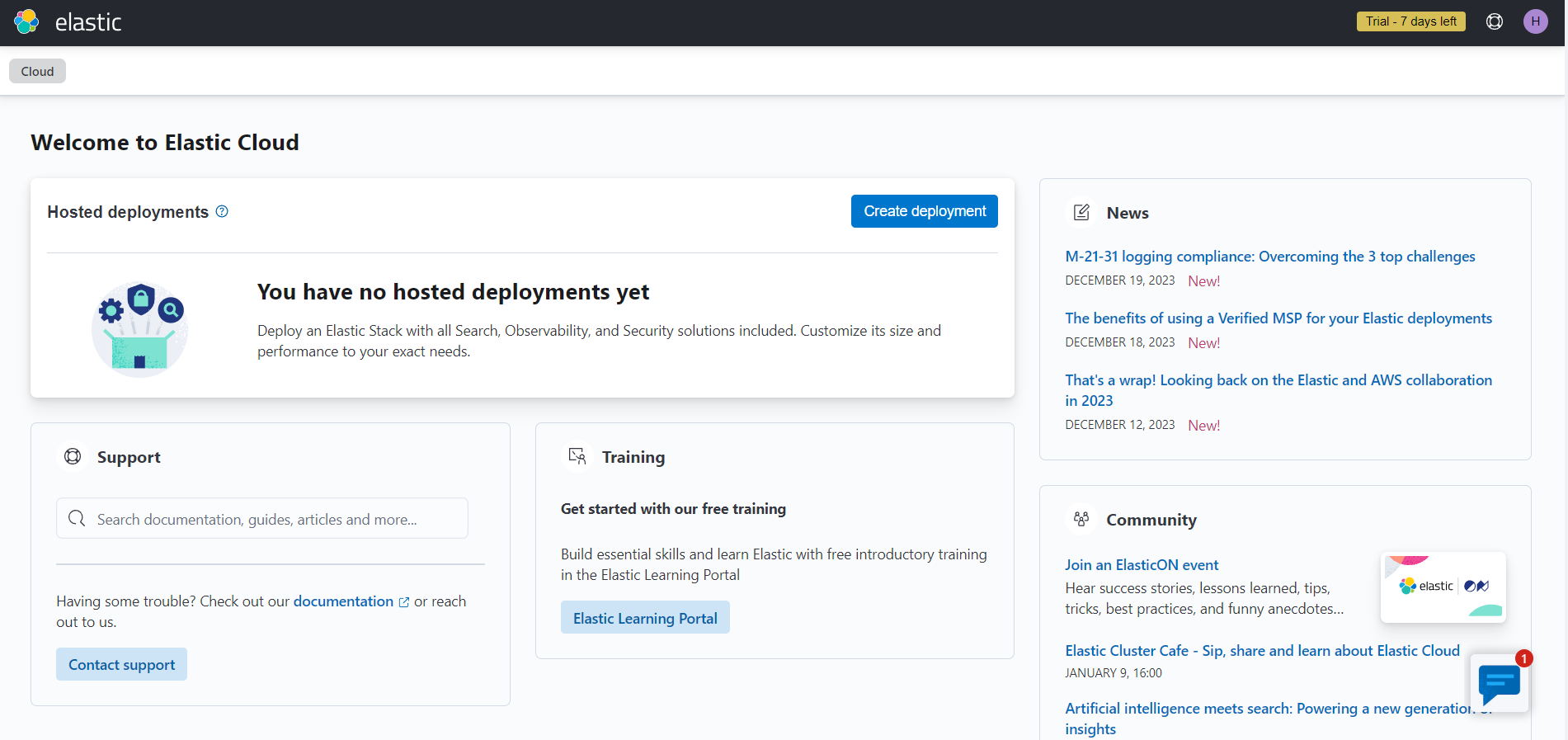
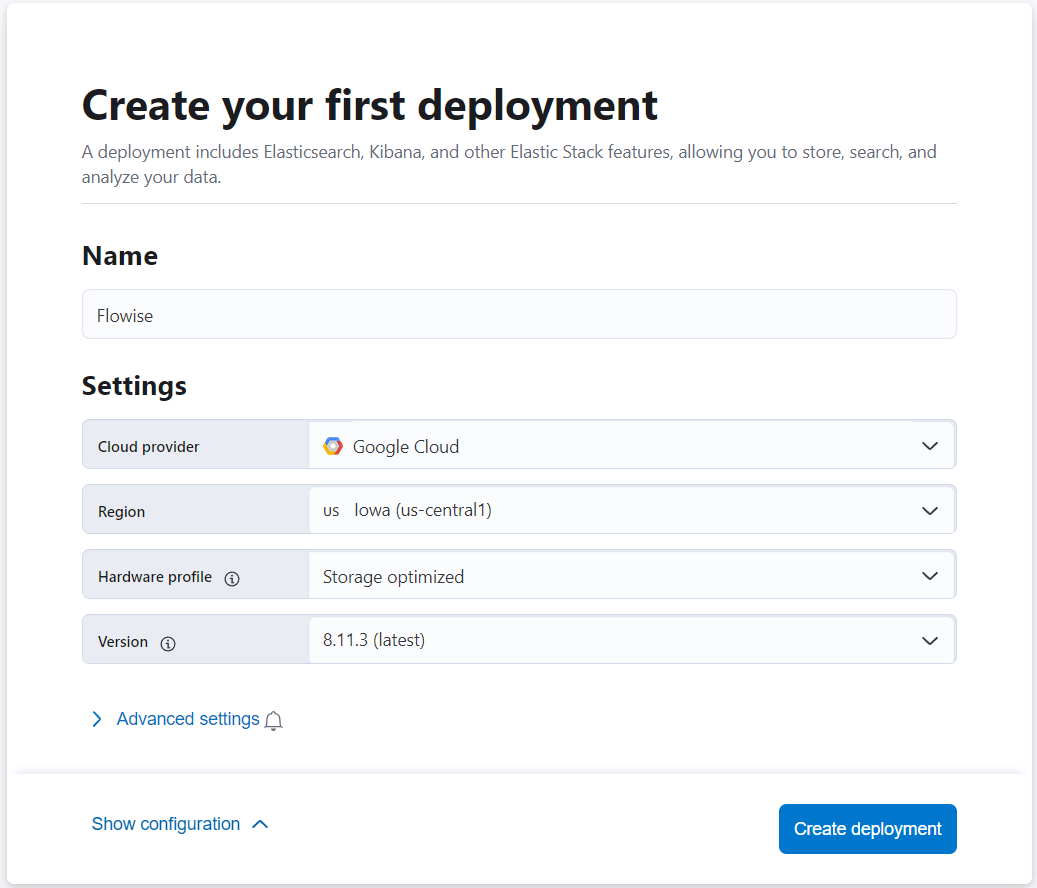
3. Click **Create deployment**. Then, name your deployment, and choose the provider.
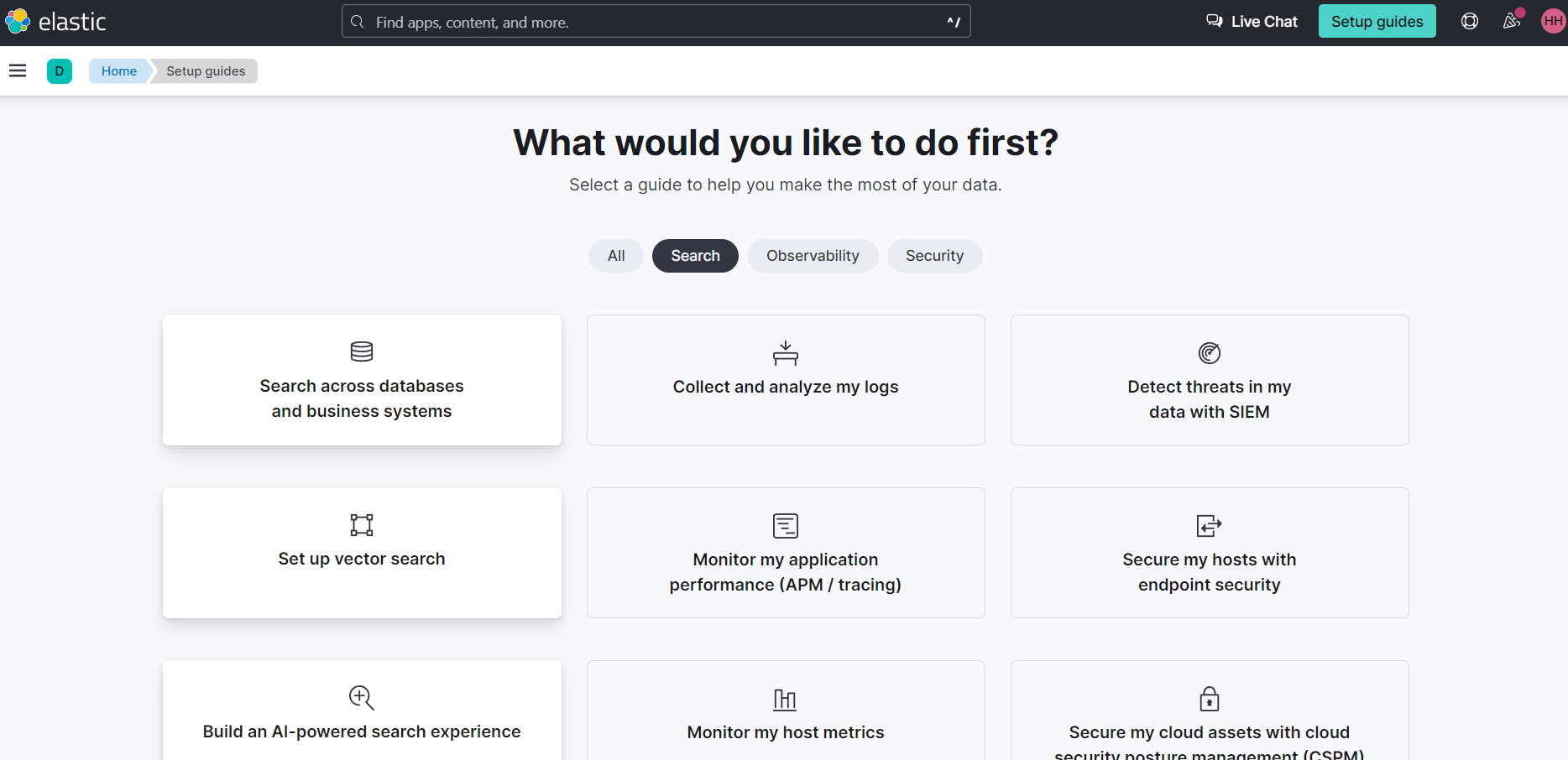
4. After deployment is finished, you should be able to see the setup guides as shown below. Click the **Set up vector search** option.
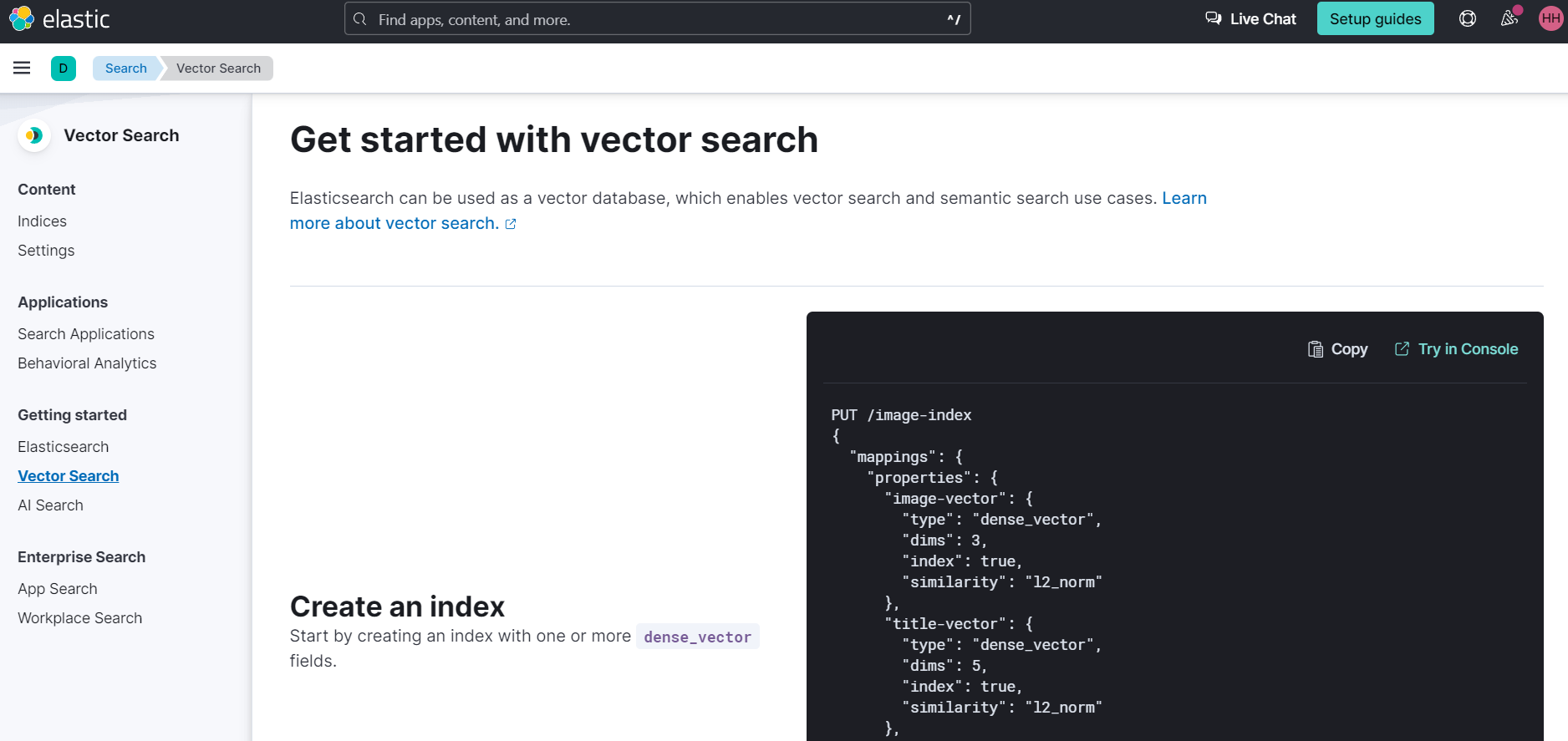
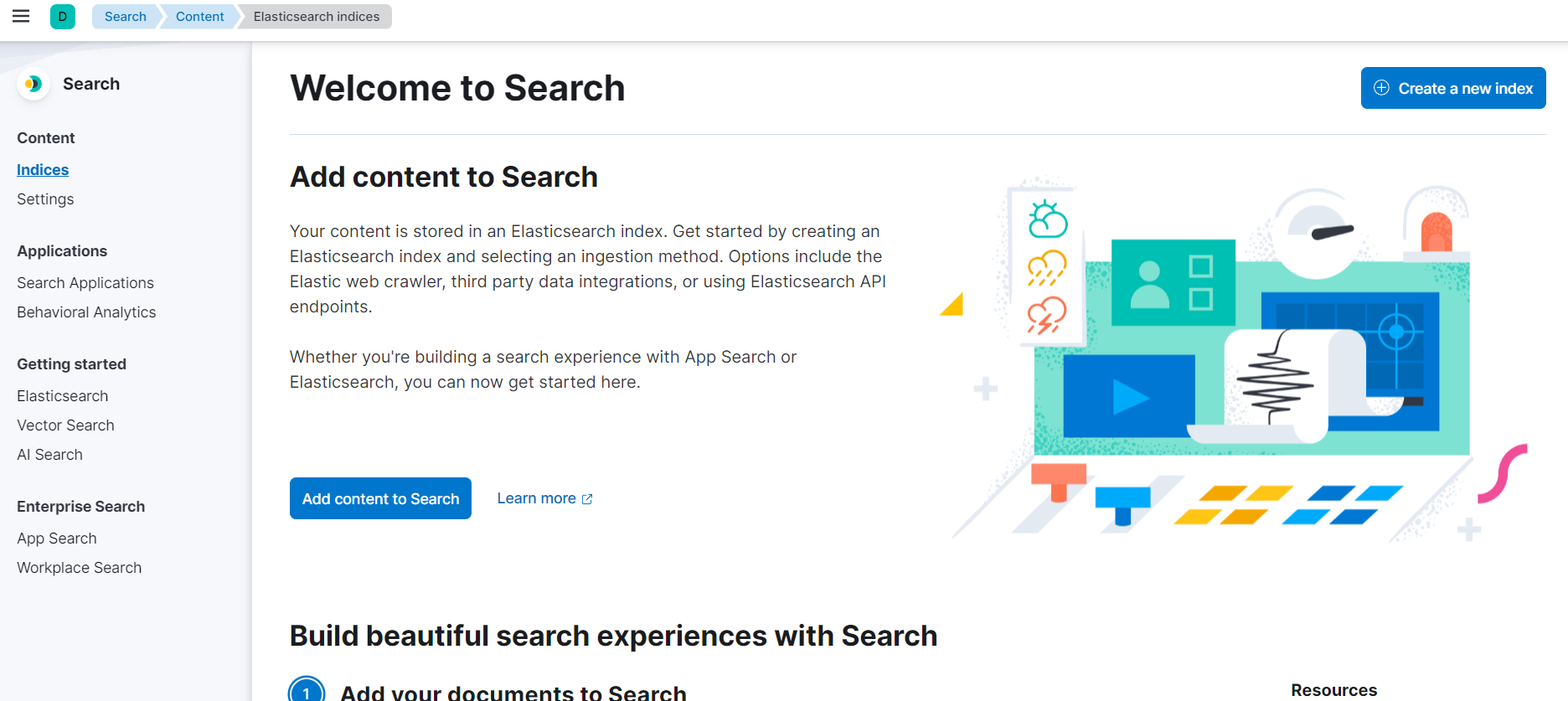
5. You should now see the **Getting started** page for **Vector Search**.
6. On the left hand side bar, click **Indices**. Then, **Create a new index**.
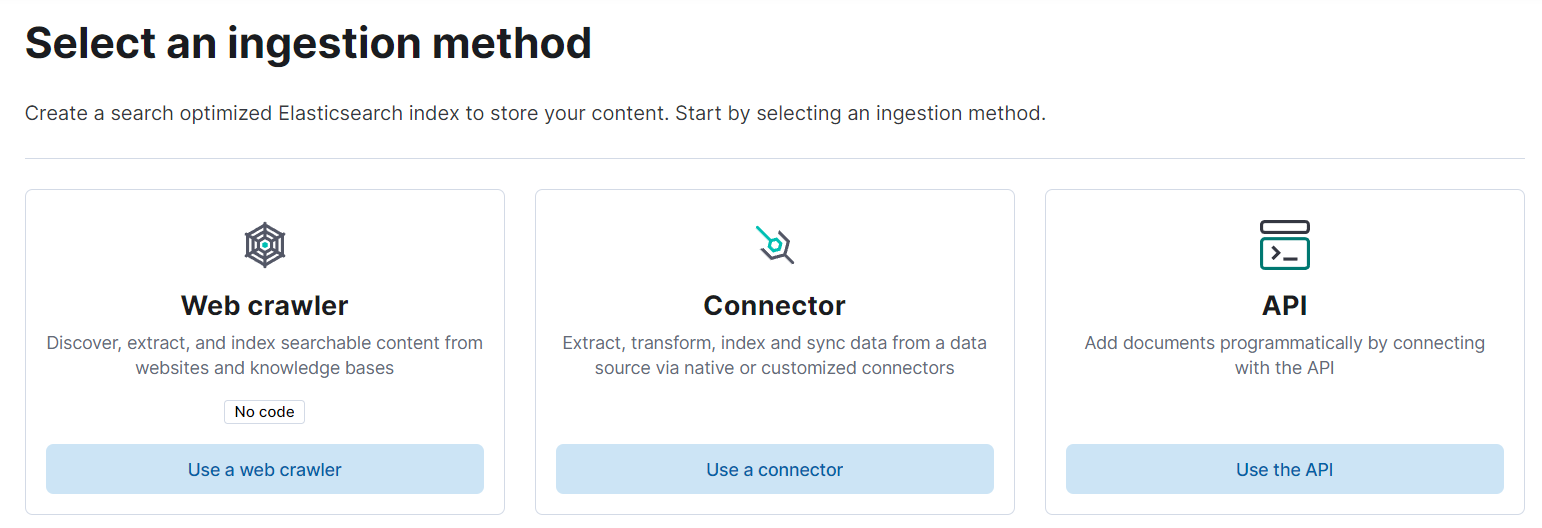
7. Select **API** ingestion method
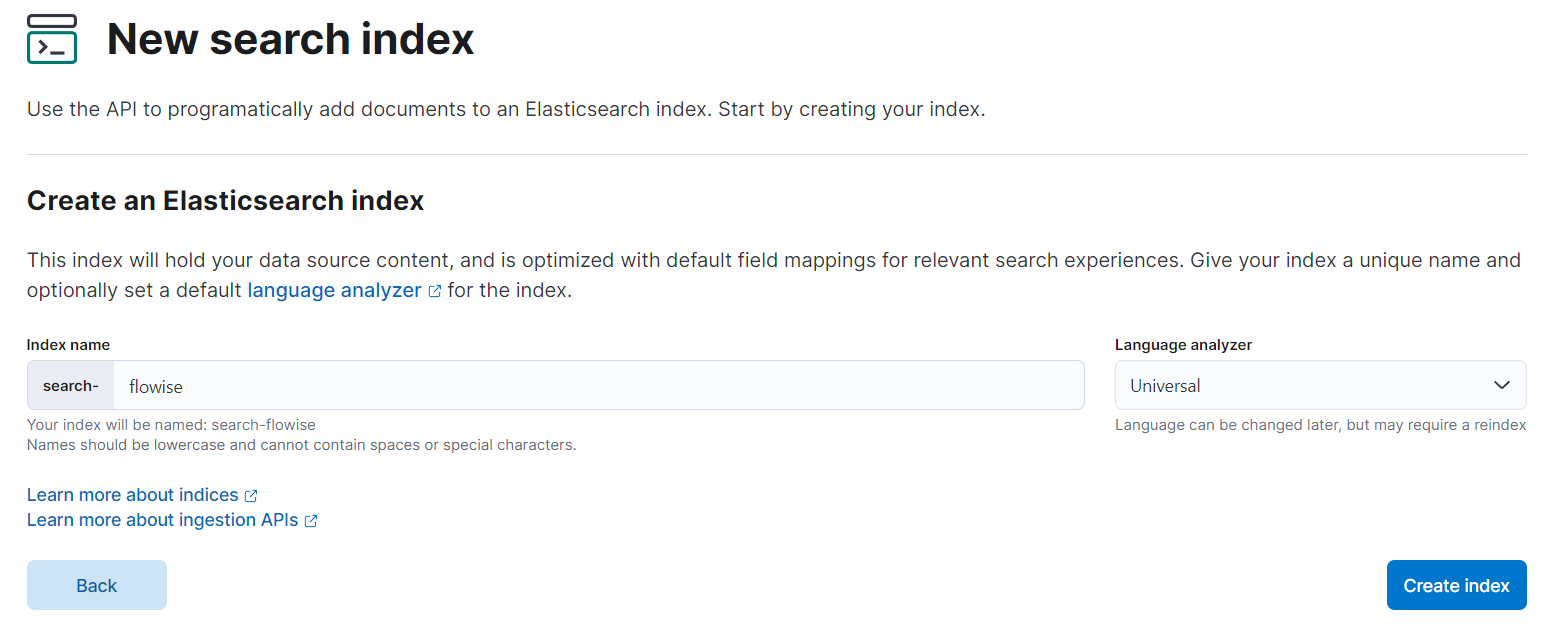
8. Name your search index name, then **Create Index**
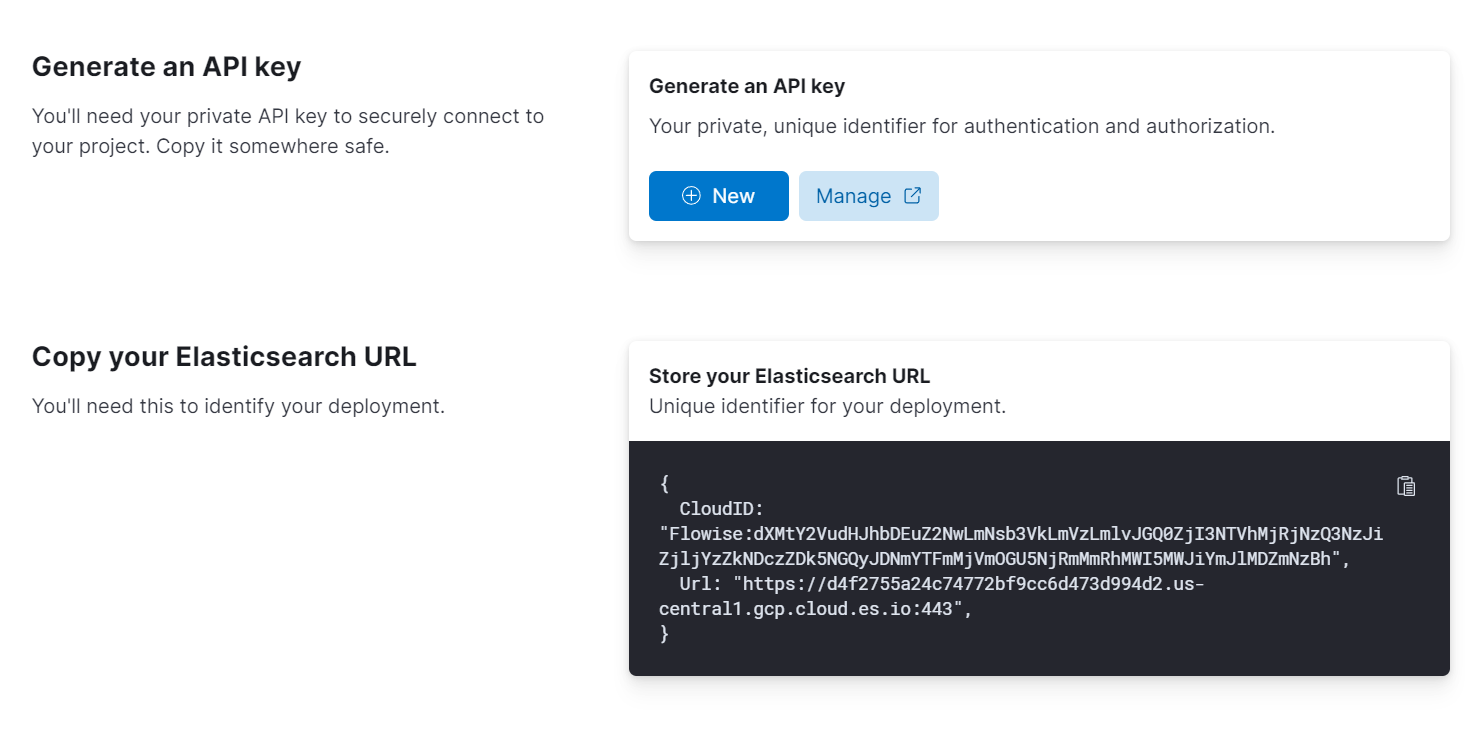
9. After the index has been created, generate a new API key, take note of both generated API key and the URL
## Flowise Setup
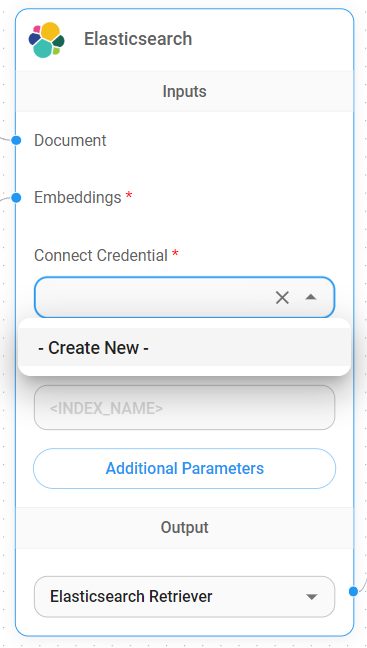
1. Add a new **Elasticsearch** node on canvas and fill in the **Index Name**
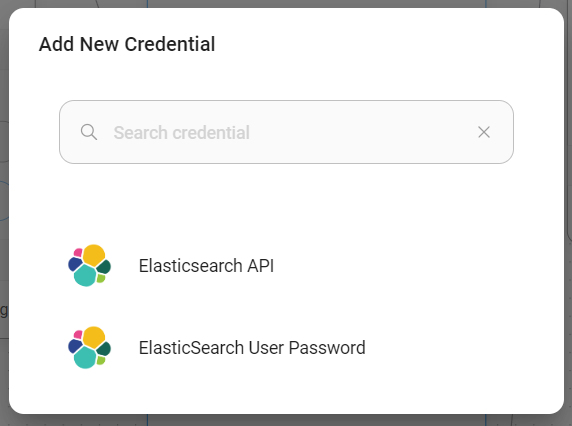
2. Add new credential via **Elasticsearch API**
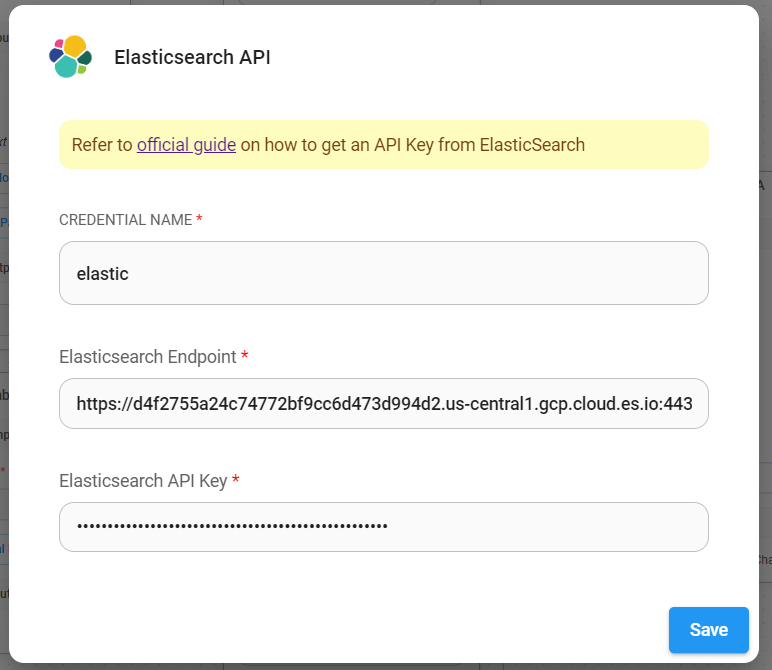
3. Take the URL and API Key from Elasticsearch, fill in the fields
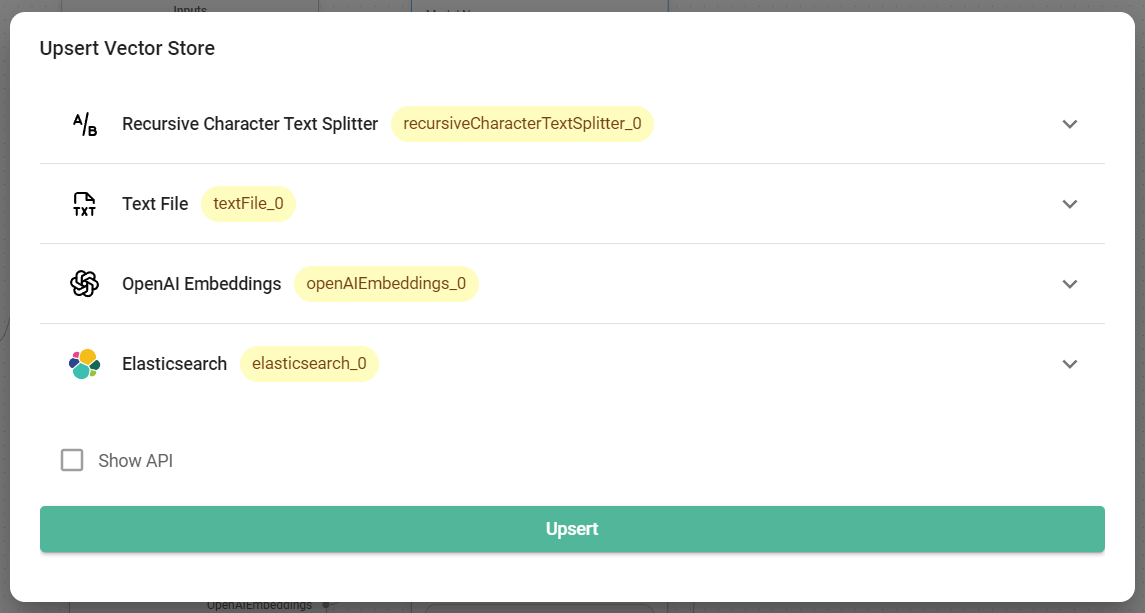
4. After credential has been created successfully, you can start upserting the data
5. After data has been upserted successfully, you can verify it from Elastic dashboard:
6. Voila! You can now start asking question in the chat
## Resources
* [LangChain JS Elastic](https://js.langchain.com/docs/integrations/vectorstores/elasticsearch)
* [Vector Search (kNN) Implementation Guide - API Edition](https://www.elastic.co/search-labs/blog/articles/vector-search-implementation-guide-api-edition)
%20(1)%20(1).png?alt=media)
%20(1)%20(1)%20(1)%20(1)%20(1)%20(2)%20(1).png?alt=media)
%20(1)%20(1)%20(1)%20(1)%20(1)%20(1)%20(2)%20(1).png?alt=media)