> For the complete documentation index, see [llms.txt](https://docs.flowiseai.com/llms.txt). Markdown versions of documentation pages are available by appending `.md` to page URLs; this page is available as [Markdown](https://docs.flowiseai.com/espanol/documentacion-oficial/integraciones/langchain/vector-stores/upstash-vector.md).

# Upstash Vector

## Prerequisitos

1. Regístrate o inicia sesión en [Upstash Console](https://console.upstash.com)
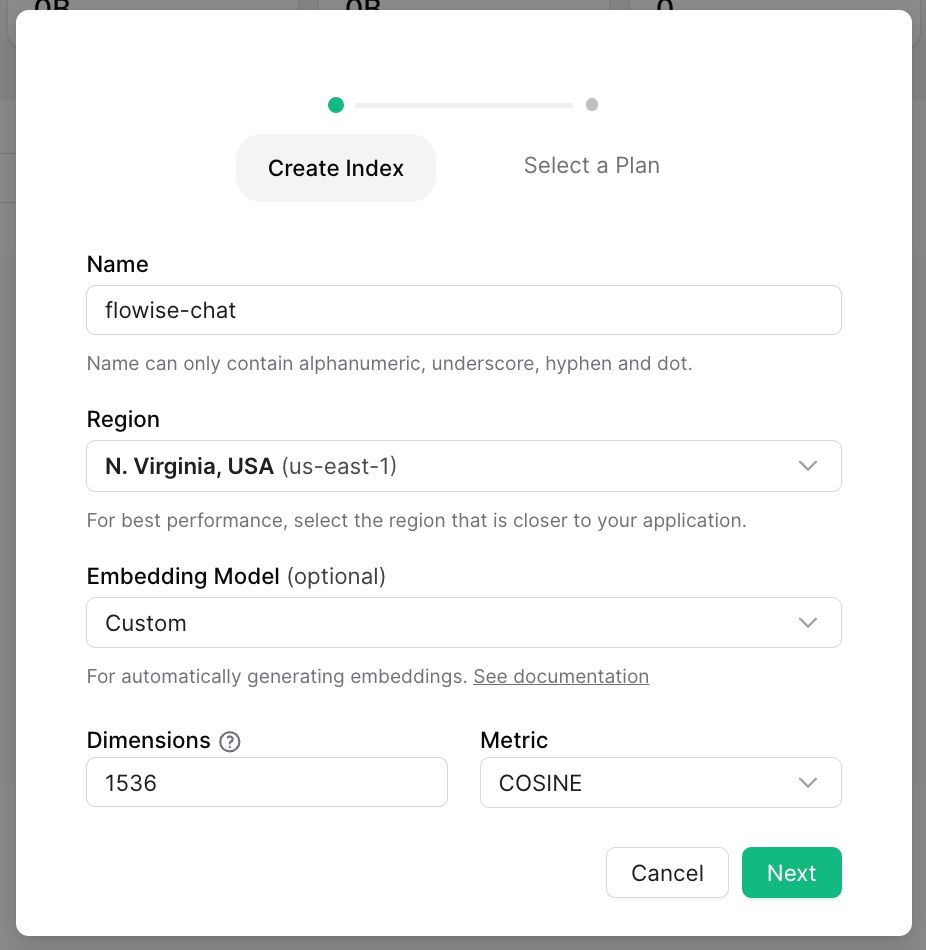
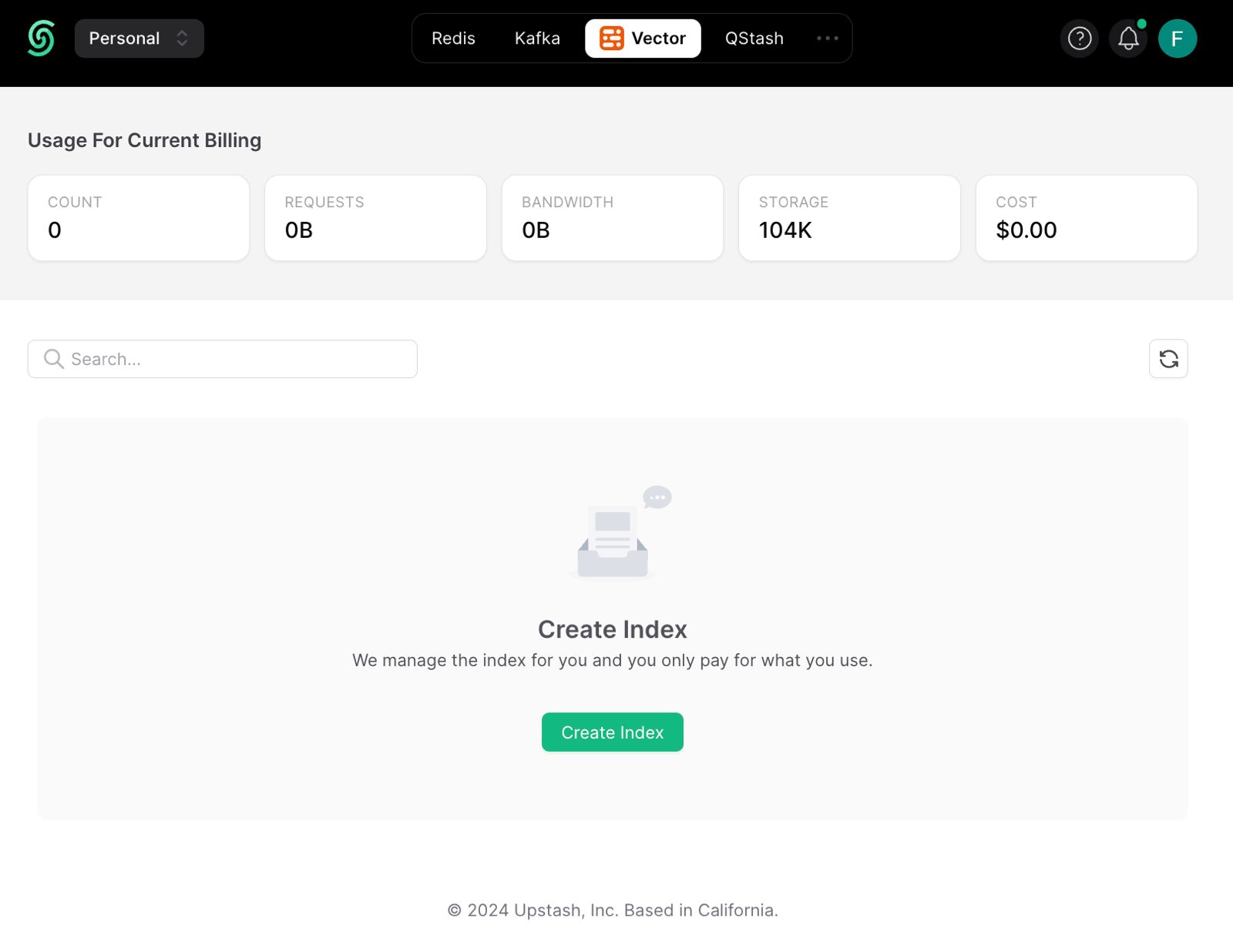
2. Navega a la página Vector y haz clic en **Create Index**

   <figure><img src="/files/dN1eKqyLIhU9aCJNPCsq" alt=""><figcaption></figcaption></figure>
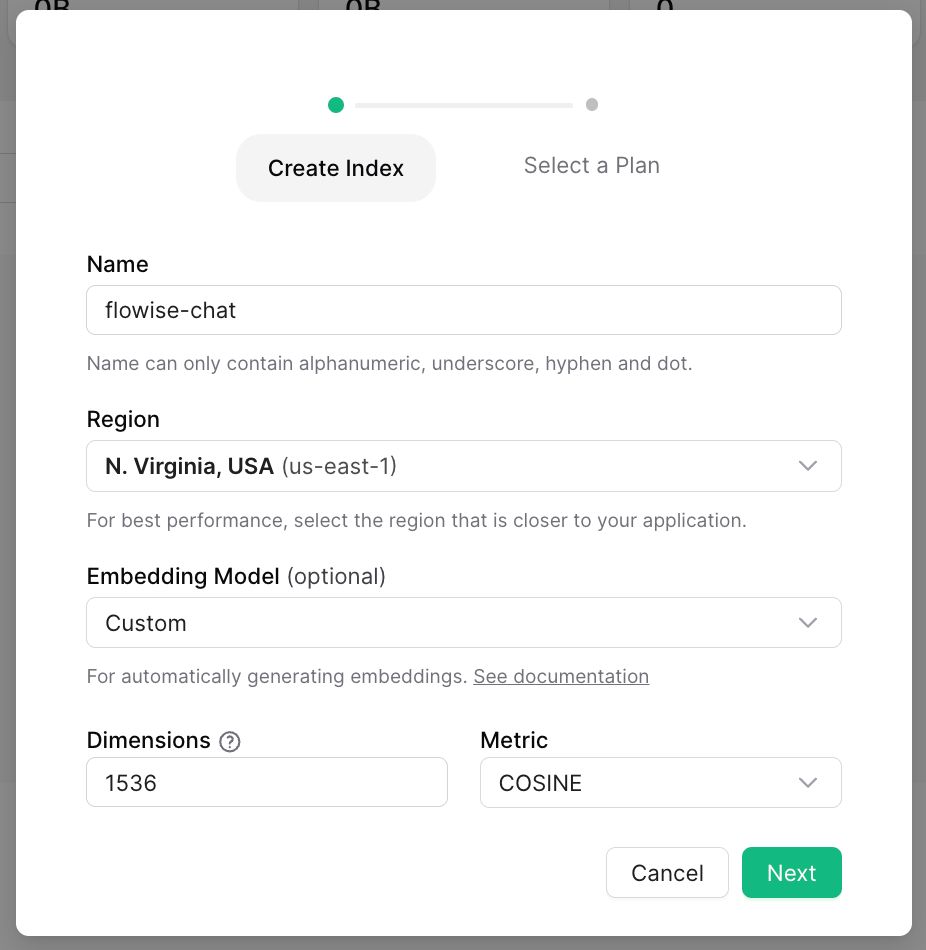
3. Realiza las configuraciones necesarias y crea el índice.

   1. **Index Name**, nombre del índice a crear (ej. "flowise-upstash-demo")
   2. **Dimensions**, tamaño de los vectores a insertar en el índice (ej. 1536)
   3. **Embedding Model**, el modelo a usar en [Upstash Embeddings](https://upstash.com/docs/vector/features/embeddingmodels). Esto es opcional. Si lo habilitas, no necesitas proporcionar un modelo de embeddings.

   <figure><img src="/files/9yy4dY1wC99V0yZ0vfFG" alt=""><figcaption></figcaption></figure>

## Configuración

1. Obtén las credenciales de tu índice

<figure><img src="/files/mIaV9hTXCwbA5wIjDClC" alt=""><figcaption></figcaption></figure>

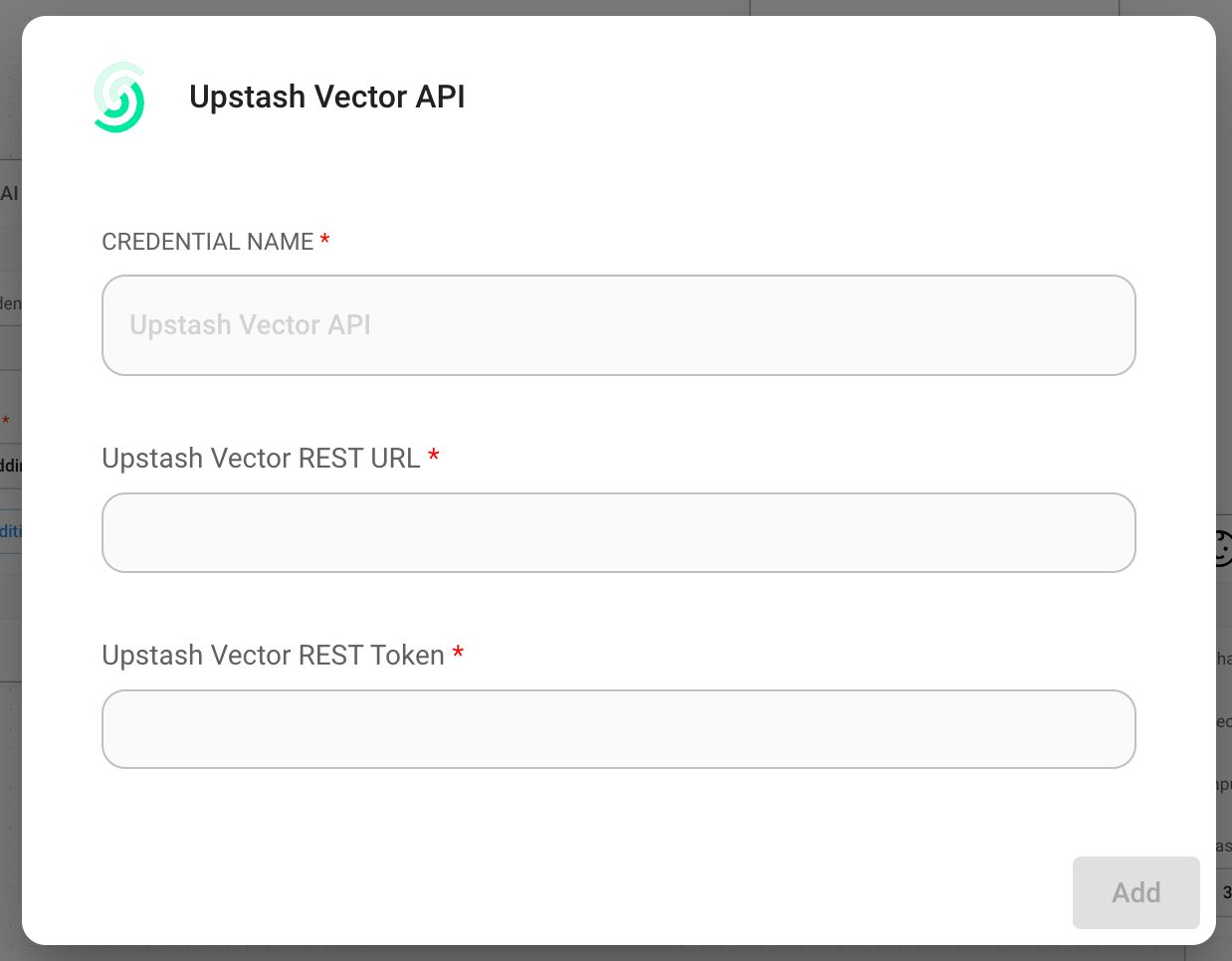
2. Crea una nueva credencial de Upstash Vector y completa
   1. Upstash Vector REST URL desde UPSTASH\_VECTOR\_REST\_URL en la consola
   2. Upstash Vector Rest Token desde UPSTASH\_VECTOR\_REST\_TOKEN en la consola

<figure><img src="/files/1N6OTHZhi7ZF8DH8zTKy" alt="" width="563"><figcaption></figcaption></figure>

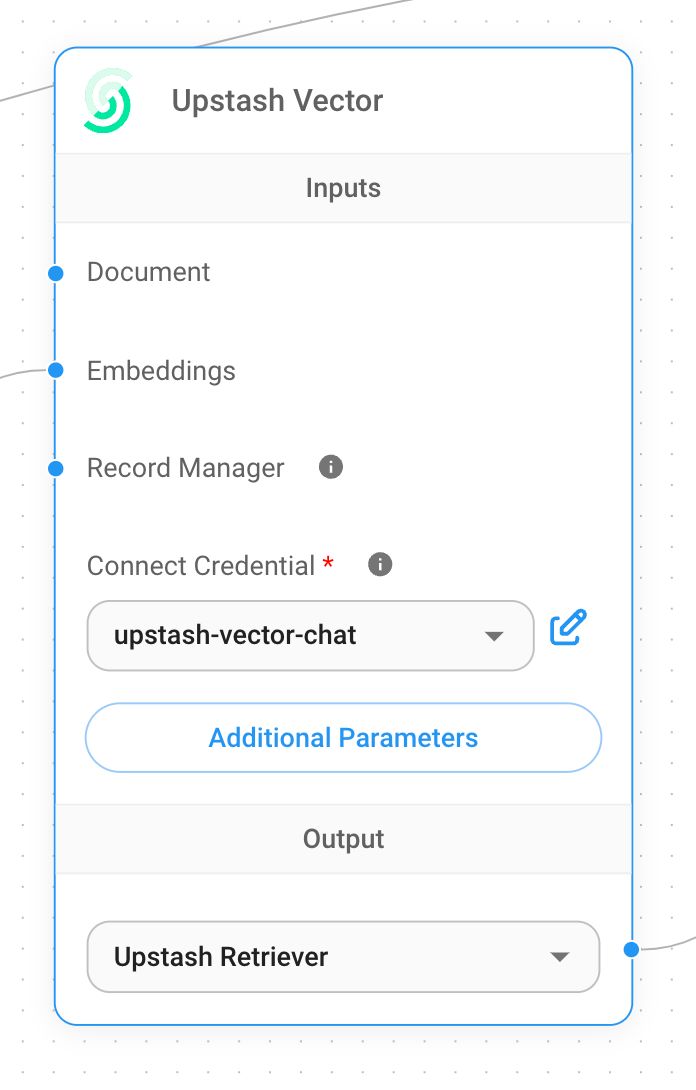
3. Añade un nuevo nodo **Upstash Vector** al canvas

<figure><img src="/files/Fj4q8XUMBIYW4yIWrTTJ" alt="" width="279"><figcaption></figcaption></figure>

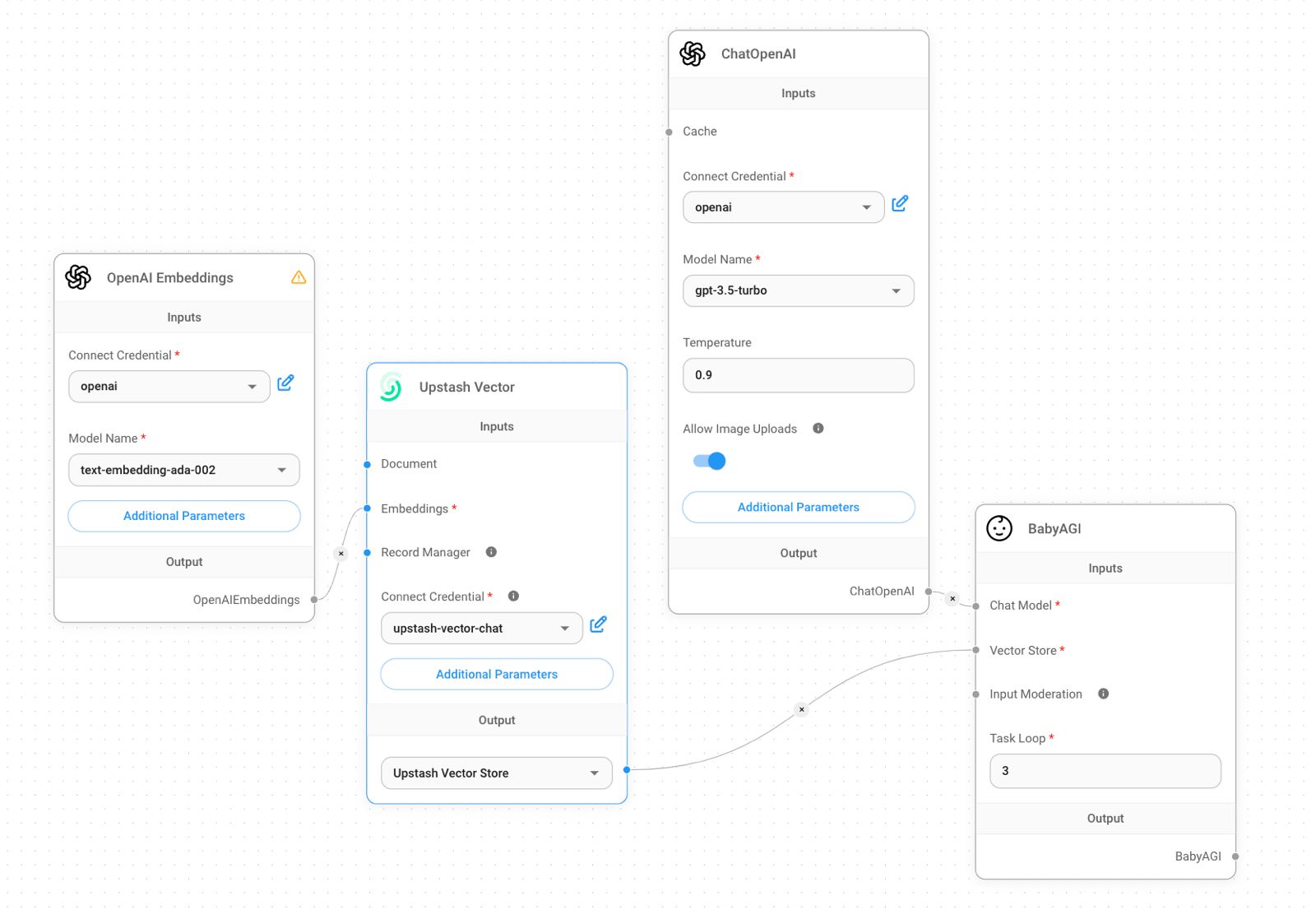
4. Añade nodos adicionales al canvas e inicia el proceso de upsert
   * **Document** puede conectarse con cualquier nodo de la categoría [**Document Loader**](/espanol/documentacion-oficial/integraciones/langchain/document-loaders.md)
   * **Embeddings** puede conectarse con cualquier nodo de la categoría [**Embeddings**](/espanol/documentacion-oficial/integraciones/langchain/embeddings.md)

<figure><img src="/files/PKFHhbOoJy4utBHbRJ67" alt=""><figcaption></figcaption></figure>

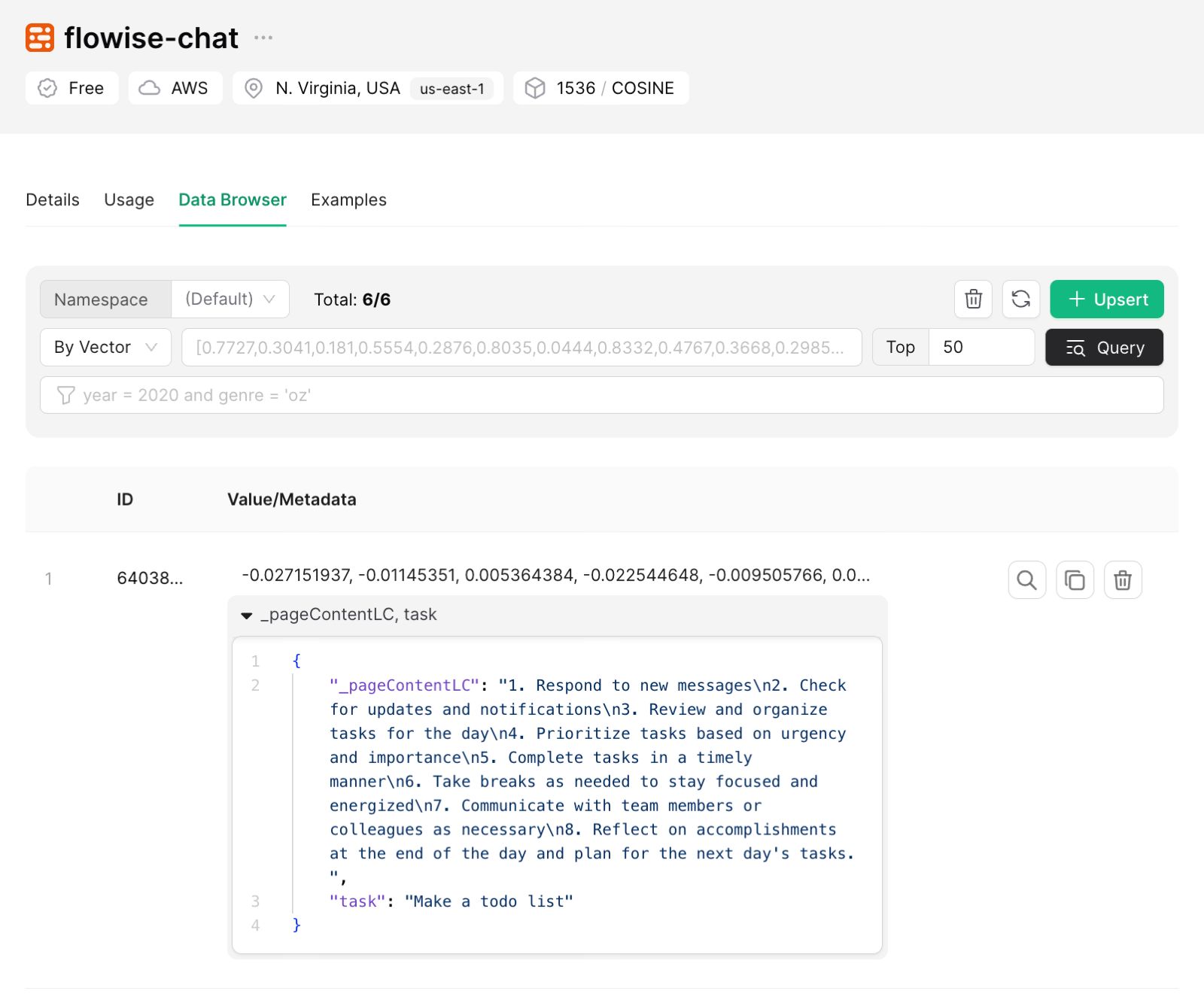
5. Verifica desde el [dashboard de Upstash](https://console.upstash.com) si los datos se han actualizado correctamente:
<figure><img src="/files/DMqa7kquN1IfmyJd1Op7" alt=""><figcaption></figcaption></figure>


---

# Agent Instructions
This documentation is published with GitBook. GitBook is the documentation platform designed so that both humans and AI agents can read, navigate, and reason over technical content effectively. Learn more at gitbook.com.

## Querying This Documentation
If you need additional information that is not directly available in this page, you can query the documentation dynamically by asking a question.

Perform an HTTP GET request on the current page URL with the `ask` query parameter, and the optional `goal` query parameter:

```
GET https://docs.flowiseai.com/espanol/documentacion-oficial/integraciones/langchain/vector-stores/upstash-vector.md?ask=<question>&goal=<endgoal>
```

`ask` is the immediate question: it should be specific, self-contained, and written in natural language.
`goal` is optional and describes the broader end goal you are ultimately trying to accomplish on behalf of the user. GitBook uses it to tailor the answer towards what is most useful for that goal.

The response will contain a direct answer to the question and relevant excerpts and sources from the documentation.

Use this mechanism when the answer is not explicitly present in the current page, you need clarification or additional context, or you want to retrieve related documentation sections.